
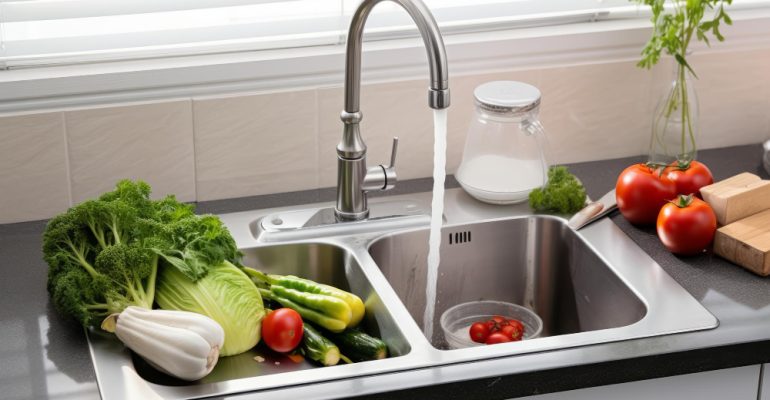
Kitchen sink selection often gets postponed until late in the renovation planning process, treated as a straightforward decision that can wait. This creates problems though as your sink choice affects benchtop cutouts, plumbing configuration and how much usable workspace remains around the cooking and preparation areas. Delaying the decision limits your options and can force compromises that affect daily functionality for years.
The sink handles more work than almost any other kitchen fixture, from food preparation, dishwashing, pot filling, vegetable rinsing and the general cleanup all happens here, often multiple times per day. Therefore, choosing the wrong size, material or configuration means living with daily frustrations that no amount of stylish cabinetry can offset.
1. Size and Configuration: Start Here
Single bowl versus double bowl remains one of the most debated sink decisions. Understanding the trade-offs helps you choose based on how you actually use your kitchen.
Single bowl sinks (700-800mm wide):
- Accommodate baking trays, roasting pans, and oversized cookware that won’t fit in dishwashers
- Provide uninterrupted basin space for extensive food preparation
- Work best when you regularly hand wash large items
- Offer maximum flexibility for soaking and washing bulky cookware
Double bowl configurations:
- Allow you to soak dishes in one side while using the other for food prep
- Enable separation of clean and dirty items during meal preparation
- Reduce individual basin capacity, as neither side accommodates large items as easily
- Suit households where multiple people use the kitchen simultaneously
Bowl depth matters more than most homeowners anticipate and shallow sinks (which are generally around 180-200mm deep) splash more and provide less clearance for stacked dishes. Deeper bowls (220-250mm) contain water better and hide dirty dishes from view, but require you to reach further down, which can strain your back during extended meal prep sessions. For most households, 220mm depth balances containment with comfortable reach.
Undermount installation sits the sink below the benchtop level, allowing you to wipe spills and crumbs directly into the basin without a raised rim blocking the path. Top mount (or drop-in) sinks sit on top of the benchtop with a visible rim. They’re easier and less expensive to install, but the rim catches debris and requires separate cleaning. In modern renovations, undermount installation dominates because the functional advantage outweighs the additional installation cost.
2. Material Durability and Maintenance Realities
Each material offers different performance characteristics. Choose based on your priorities for durability, maintenance, appearance and budget.
Stainless steel:
- Quality grades (18/10, 18-gauge or lower) resist staining and handle impacts well
- Develops scratches over time, textured or brushed finishes disguise wear better than polished
- Moderate cost with straightforward maintenance requirements
- Creates metallic sounds when water runs or dishes contact the surface
Quartz composite:
- Non-porous, stain-resistant surface that resists scratches and heat damage better than stainless
- Quieter during use as it eliminates metallic sounds
- Available in various colors to match or contrast with benchtops
- Costs 50-100% more than comparable stainless steel and requires specific cleaning products
Fireclay:
- Exceptional heat resistance with classic aesthetics
- Resists chipping better than porcelain but can chip from heavy impacts
- White fireclay develops subtle patina over years
- Premium pricing similar to quartz composite
Granite composite:
- Similar functionality to quartz composite with slightly better heat resistance
- Typically costs less while offering comparable durability and stain resistance
- Non-porous surface resists bacteria and mould growth
3. Installation Requirements That Affect Your Budget
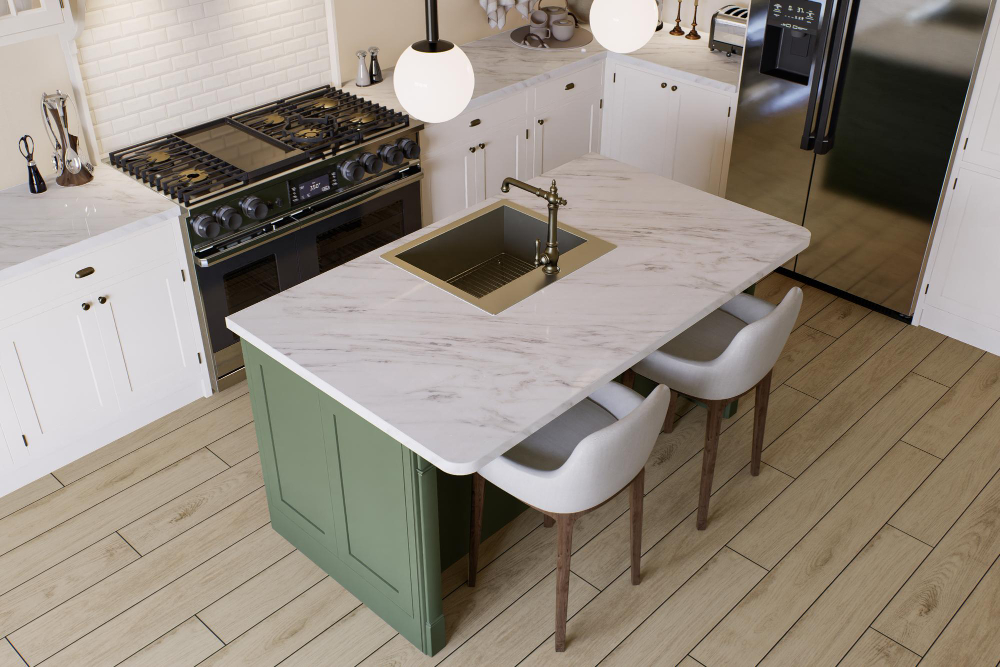
Undermount sinks require solid surface or stone benchtops. The underside must be finished and sealed since it’s visible below the sink. Installation involves precise cutouts and secure mounting to support the sink’s weight when filled. This adds labor cost but creates the cleanest visual result. Laminate benchtops can’t support undermount sinks reliably as the particleboard substrate degrades when exposed to moisture at the cut edge.
Top-mount installation works with any benchtop material as the sink’s rim provides the mounting surface and hides the cut edge, making it the budget friendly option. The visible rim breaks the visual flow between sink and benchtop, and the seam collects grime that requires regular cleaning.
Flush mount installation sets the sink rim level with the benchtop surface, combining some visual benefits of undermount with broader compatibility. It requires precise cutting and costs more than standard top-mount but less than undermount.
Features Worth Considering
Built-in draining boards extend the sink’s work surface, providing space for washed items to air-dry. Integrated designs mould the draining surface into the sink basin, creating channels that direct water back into the bowl, and this keeps your benchtop dry and reduces the need for separate dish racks.
Workstation sinks include accessory systems such as cutting boards, colanders, drying racks that sit within the sink basin at various heights. For smaller kitchens where workspace matters, this flexibility proves valuable. The accessories require storage when not in use, and the additional components increase the purchase price substantially.
Offset drain placement positions the drain toward the back or side of the basin rather than center. This maximizes usable depth at the front of the sink and provides more clearance for washing large items.
Soundproofing underlays reduce the noise water and dishes make against metal sinks. Quality stainless steel sinks often include factory-applied sound dampening on the underside. For renovations where the kitchen opens onto living areas, this feature significantly reduces disruption during meal cleanup.
What We Recommend Based on Installation Experience
Choose single bowl configurations when you regularly hand wash large cookware or baking equipment, when extensive food preparation is central to how you use your kitchen, or when flexibility for soaking and washing bulky items matters more than divided workspace.
Select double bowl layouts when multiple people use the kitchen simultaneously, when you prefer to separate tasks like soaking in one basin while rinsing in the other, or when your dishwasher handles most large items and the sink primarily serves food prep.
Invest in undermount installation if your budget allows for the additional installation cost, if you’re using stone or solid surface benchtops, and if easy cleanup and visual integration matter to you.
For material selection, stainless steel in 18-gauge or lower provides reliable performance at moderate cost. Quartz or granite composite suits homeowners who prioritize appearance retention and quieter operation despite higher investment. Fireclay works well when classic aesthetics and heat resistance are priorities.
Avoid features you won’t use consistently such as elaborate accessory systems and workstation configurations appeal during planning but often go unused once the kitchen is operational. Focus budget on core sink quality before adding specialised features.
If you’re planning a kitchen renovation and want guidance on fixtures that will perform well in your specific space, contact us to discuss your project requirements.